
Woo is Good, Actually
Or, Mythology as a UI for the Mind

There is a classic essay by Eliezer Yudkowsky titled Making Beliefs Pay Rent (in Anticipated Experiences). The central metaphor is that a belief is like a tenant in your mind. It takes up space. If it wants to stay, it needs to pay rent.
What does that mean? Well, if you believe “gravity exists,” that belief pays rent by predicting that if you drop a bowling ball, it will hit your foot. If you believe “post-modernism is true,” and you cannot tell me exactly what distinct sensory experience you expect to have next Tuesday because of that belief, the landlord kicks it out. While it’s technically a good rule, it seems to me damaging to apply it everywhere. Sure, it clears out clutter of “floating beliefs”, but it also has us heavily discount the fuzzy, low-resolution patterns that our intuition detects long before our logic can prove them.
It works for physics, where the observables are settled. But in psychology, the territory is irreducibly complex and the map is still being drawn in crayon.
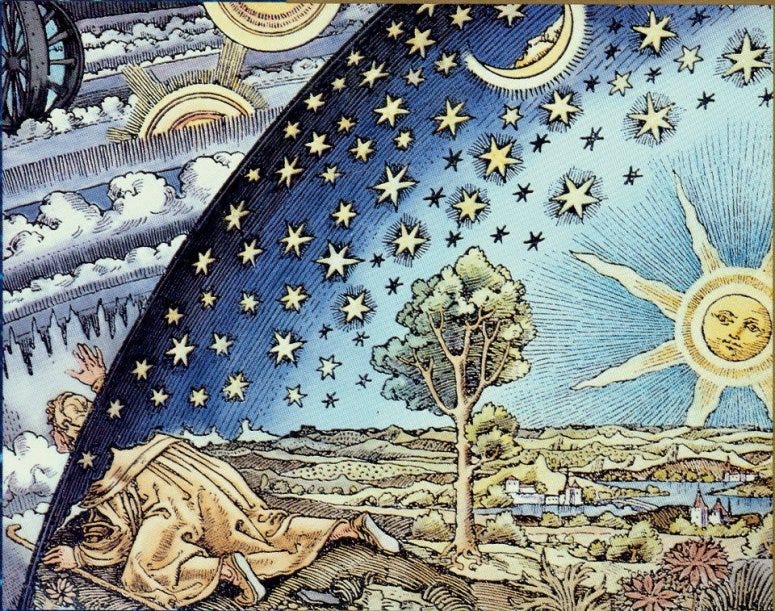
I view the current reign of three-letter acronyms (CBT, DBT, ACT) as the High Modernism1 of the mind.
They’re efficient and empirically verifiable. They’re extremely convenient, consisting of worksheets, manualized protocols, and homework. If a patient has Depression, the protocol administers the PHQ-9. The clinician applies the steps. The system expects the PHQ-9 score to drop by 3.5 points. The rent gets paid.
So what “irks” me about them? It wasn’t not so clear upon first reflection, especially because all in all, their existence is absolutely net-positive. They save many lives, every day, on a scale that other types of therapy would never be able to achieve.
My intuition though, is that the requirement of making therapy measurable has made it shallow. It has pushed depth psychology and jungian analysis into a fringe. If you are an empirical therapist, and you only have tools to measure “negative automatic thoughts,” you will see every patient as a bundle of negative automatic thoughts. You will fix the thoughts. The PHQ-9 score will go down. And the patient might still feel empty, because the problem was located in a part of the psyche that your map doesn’t have a label for. Concept-shaped holes can be impossible to notice.
Imagine your computer desktop. You see a folder icon. You click it, and it opens. You drag a file into the trash can.
Is the “folder” real? No. Strictly speaking, it is a hallucination. There is no little yellow cardboard object inside your hard drive. There are only scattered sectors of magnetized metal and a file allocation table. It is a “floating belief” that doesn’t correspond to the physical reality of the machine.
But if you try to use a computer by manually editing zeros and ones on the sector level, you will not get any work done. You need the lie. You need the Interface. You may be able to know the truth behind how a computer works, but you’ll never be able to do so for your brain.
We do not get to have root access to our own brains. We cannot open a terminal and type sudo apt-get remove anxiety2. We are stuck interacting with our own wetware through a layer of abstraction that evolution cobbled together out of social dynamics and spatial metaphors.
A lot of what we consider “Woo” (Jungian archetypes, tarot, chakras, vibes) is not a claim about physics or the truth of reality. It is a User Interface (UI) for our nervous system. Just because the UI isn’t “true” (in the physics sense), doesn’t mean it can’t be “real” (in the causal sense).
In the early 20th century, Psychology was dominated by Behaviorism. They looked at concepts like “internal representations,” and asked: “Can I see this?” The answer was no. So, the Behaviorists declared that talking about internal mental states was unscientific woo. They built a cage around their discipline, strictly limiting themselves to inputs (stimulus) and outputs (response), and refused to speculate on the black box in the middle.
This set psychology back by decades. In the 1950s, the Cognitive Sciences emerged, eventually snowballing into what became our modern AI paradigms. They started positing “mental maps” and “information processing.” These were floating beliefs! You couldn’t measure a mental map with a ruler. But by allowing these beliefs to exist (by assuming the black box had an internal structure), progress across neuroscience, AI, psychology, and linguistics flourished.
When we demand that every therapeutic insight immediately predict a quiz score, we are acting like the Behaviorists. We are refusing to acknowledge the black box because we can’t open it yet.
High Modernist therapy (CBT) attempts top-down correction; “reshaping“ thought patterns is really just training the conscious mind to out-argue the black box. Thoughts emerging from the unconscious are handled logically and relabled as cognitive distortions.
“Woo” therapy (Jung, IFS, Somatics) assumes the black box doesn’t speak logic, it speaks in images, stories, and feelings. It accepts the “magic” because magic is just the admin console for the unconscious.
Jung talked about the “collective unconscious.” To the modern rationalist, this sounds like pure noise. If you believe in the collective unconscious, what do you anticipate seeing? A ghost? A telepathic message? The rationalist asks: “Is the collective unconscious implemented in reality?”
This is the wrong question. The right question is: “Is the collective unconscious a useful model for a set of human experiences we don’t yet have the means to explain?”
There is a distinction between “believing X is literally true” and “using X as a searchlight.” Jung’s willingness to engage with “woo” allowed him to notice things that more rigorous scientists missed. He built a belief network that didn’t connect to the ground, precisely so he could get a high enough vantage point to see the terrain.
When a Jungian therapist tells you to “confront the Shadow,” they are not making a claim that such a thing actually exists in your brain as a circuit. They are handing you a model that allows you to interact with a complex cluster of repressed amygdala responses and shame-bound memories that are otherwise too messy to handle. Demanding to have a mechanistic explanation for your shame is as useless as reading binary. You will freeze.
We see this same dynamic in AI today. When interpretability researchers try to figure out what a LLM is doing, they don’t look at the weights. They look for “black boxes” and “features.” They say things like, “This cluster of neurons seems to be related to the ‘Golden Gate Bridge’.”
It is a “floating” abstraction. The researchers are inventing a mythology—a woo-framework—to make the black box legible to human minds.
We are all black boxes. We are giant, messy neural networks trained on millions of years of survival data. The conscious, rational part of our brain is just the tiny interpretability module sitting on top, trying to explain why the rest of the system just did what it did.
So, how do we resolve the conflict?
Instead of saying: “I will only believe what is True.”, we can try saying “I will use whatever Map gets me to the destination, but I will remember that it is a Map.”
You can believe in the Collective Unconscious. You can consult the Tarot and pray to a God you are only 12% sure exists. You can do these things because they activate the latent connection-generators in your mind that strict logic suppresses.
The danger is forgetting the distinction: if you start thinking the Tarot cards control the stock market, you have confused the UI for the operating system. But if you refuse to use the UI because “it’s not the underlying reality,” you are sitting in front of a supercomputer, staring at a blank screen, refusing to click the mouse because you can’t prove the cursor exists.
Woo is good, actually. Not because it is True, but because it is Usable.
There is a concept in James C. Scott’s Seeing Like a State called “High Modernism.” It is the ideology of the central planner who looks at a messy, winding medieval street and says, “This is inefficient. I will bulldoze it and build a grid.” The grid is legible. The grid is clean. The grid is easy to police and easy to tax. But the grid also destroys the local social fabric, creates wind tunnels, and makes everyone depressed.
Unless you’ve achieved Nirvana